By Neil Clarke
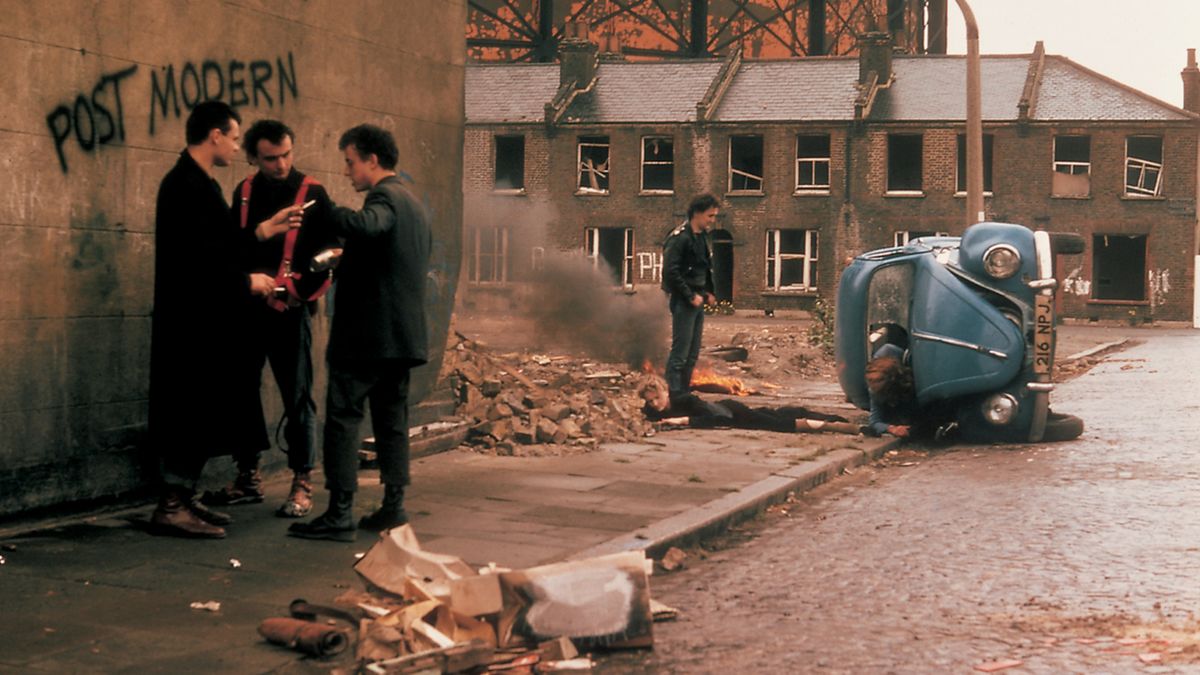
The words ‘Bethnal Green’ and ‘nature reserve’ may seem an improbable combination. For context, Google search results euphemistically describe East London’s Bethnal Green as “a down-to-earth area”, insinuating scenes of inner-city squalor akin to, say, Derek Jarman’s Jubilee. (Thanks, Google.) Yet it’s exactly the Bethnal Green Nature Reserve’s location, smack-bang in the middle of a densely populated urban area, that makes it so magical: nestled next to the sterile tarmac of a sixth form playground and overlooked by mid-century flats, this pint-sized Narnia is a little slice of natural world holding the city at bay.
Though predominantly wooded, the site also boasts a medicine garden; a pocket wetland with a handful of ponds home to smooth and/or palmate newts; bat towers inhabited by common pipistrelles; a mushroom farm (‘Mycelium Alley’); and a miniature wildflower meadow. All within just one acre! Carved out of the East End by the Luftwaffe (lumps of church still litter the woodland), this accidental green space has been cared for by local residents, volunteers, staff, and trustees since 1977, on behalf of a complex ecosystem of arthropods, amphibians, birds, mammals, fungi, plants, and trees.
Not only that, the nature reserve also displays a rolling series of artworks on an outward-facing billboard; serves as a base for the Mobile Apothecary, a group which creates and distributes homegrown herbal remedies to underserved local communities; hosts Forest Schools (a nature club for children and their adults), Community Ecologies (workshops exploring the connections between people, place, and the natural world), Misery (a QTIBPOC plant-medicine programme), qi gong community classes, arts events (including multiple editions of Kupala Festival, a midsummer celebration based on Slavic folk traditions), and more.
A new sister site, the adjacent Bethnal Green Ecology Garden (or Beejie-Eejie – an acronymic delight), has turned a once-neglected space into a thriving garden where 25 beds are available to local residents for growing food. Continued expansion will see the creation of additional growing areas and diverse ecological habitats including wetlands, hedgerows, meadows, bird-roosting sites, and insect-friendly zones.
I’ve been volunteering at the reserve for about three years (even abandoning Shoreditch for Stockwell hasn’t stopped me) – yet, despite so many activities taking place, it was only this summer that I realised how special it could be to screen a film there. Then, in October, I was pointed in the direction of Counterpoints’ Our Shared Futures: Climate & Migration Community Film Festival. Its line-up, “explor[ing] themes of climate crisis, displacement, colonialism, conflict, resilience, and hope”, provided an ideal opportunity to make a screening happen that would resonate with the values and preoccupations of the site.
So, a month later, at the tail end of a particularly Baltic cold snap, I found myself in the reserve’s ‘amphitheatre’ – its central clearing – watching one of the feature films from the OSF programme. The amphitheatre’s awning could only comfortably shelter an audience of 20 or so in the event of rain – but, despite that possibility, and the temperature, 20 or so hardy souls braved the November evening to watch Alejandro Loayza Grisi’s Utama.
Temporarily putting aside the uprooting of alexanders, the shovelling of woodchip, and the Sisyphean skimming of duckweed from ponds, a small group of volunteers had come together to source equipment and lug around battery-powered generators – not to mention all the other invisible work that even such a modest event requires. We borrowed what equipment we could – thanks, Max! – and rented the rest (shout-out to Hygglo and the Library of Things). In fact, everything came together with unexpected ease – some inevitable technical hitches aside.


With corn duly popped over the fire bowl and medicine-garden tea dispensed, the screening commenced. The rain held off. The screen didn’t blow over. No-one got frostbite (that I know of).
Grisi’s background in photography is conspicuous in the film’s consistent and frequently spectacular beauty, illuminated by crisp Andean light and equally stark in its contrast to the hardships faced by the film’s elderly protagonists.
The story of a couple facing drought in the Bolivian Altiplano could be easily presented as a didactic Anthropocene morality tale, or a prime slice of world-cinema miserabilism, but the film is has enough regard for its audience to avoid such simplifications, and doesn’t presume to offer any easy answers. As a (Bolivian) reviewer notes on Letterboxd, though relocating to the city would free the couple from the effects of the drought, that relocation would mean “giv[ing] up [their] identity and [their] spirit for a more materialistic and less meaningful reality”.
The film’s emphasis on the lived experience of individuals facing climate-induced migration makes concrete one manifestation of an experience frequently flattened into statistical abstraction. And, as a particularly climate-vulnerable region, the Altiplano is a bellwether for the extreme climatic effects that continue to increase as a result of human-driven global warming, and which disproportionately affect low-income communities.
Utama also powerfully illustrates the true nature of these effects – not only physical displacement but loss of language and cultural traditions as much as livelihoods, community, and connection to place. As shown in the film, migration to cities contributes to a loss of ethnic identity and of minoritised languages like Quechua, through a process of acculturation, and obliterates ancestral Indigenous relationships to water, land, and animals.
As Grisi puts it in his director’s statement, an “already hostile territory is becoming increasingly inhospitable, forcing native populations to migrate to cities where they do not know how to live and where they face a language that is not their own”. As such, this displacement comes at a cultural, emotional, and existential cost.
After the screening, the audience and I found ourselves returning to London from 3,650 metres above sea level and 10,000 km across the North Atlantic – and considerably further in terms of lived experience.
Despite the friends I’ve made since starting to volunteer at the reserve, it’s never struck me more forcefully than it did on that evening that, in a very real way, being a reservist also means being part of a community. Other volunteers, attending as guests, dashed off to source replacement plug adaptors, or brought along home-brewed chai, or jumped onto the ticket desk.
It’s in this spirit of community that I hope that we’ll be able to screen more films at the reserve (albeit preferably in warmer weather). The site is firmly ensconced in its winter dormancy, with just one Saturday volunteering session per month until they restart on a weekly basis in April – but, join us! There are always plants to plant, harvest, water (or dig up), wildlife to observe, mushrooms to be cared for, compost to be turned, or litter to be picked.